
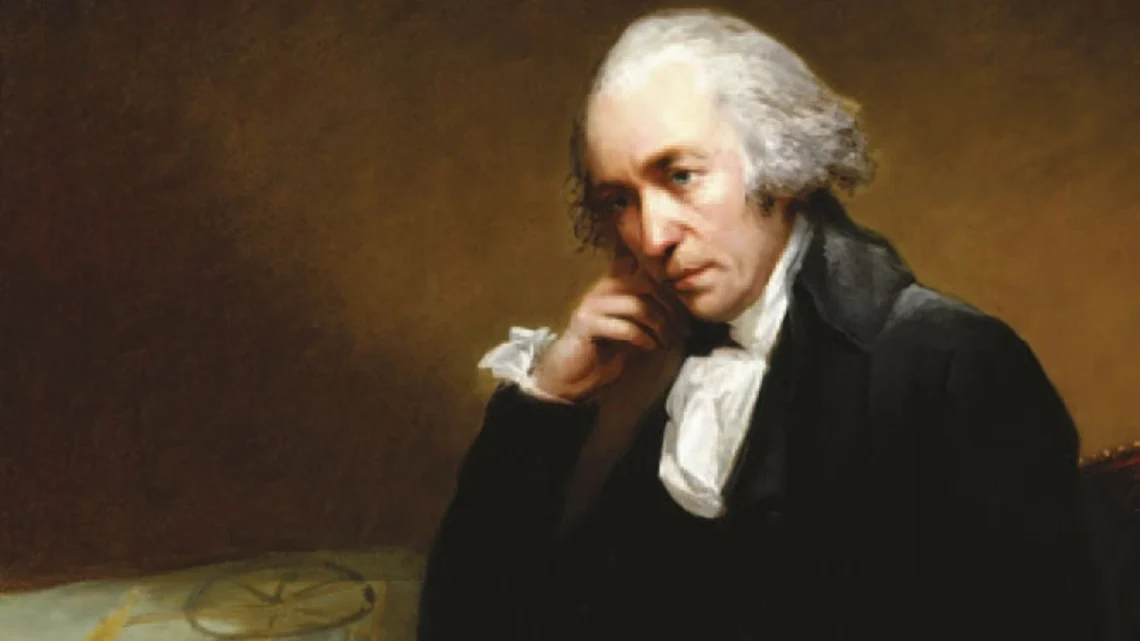
James Watt was a Scottish inventor, mechanical engineer, and innovator whose improvements to the steam engine transformed industry and helped power the Industrial Revolution. Widely regarded as one of the most influential inventors in history, Watt’s contributions dramatically increased the efficiency of steam-powered machinery and changed the course of global economic development.
His name became so closely associated with power and engineering that the unit of power, the watt, was later named in his honor. Although he lived during the eighteenth and early nineteenth centuries, his inventions continue to influence modern engineering and technology.
Quick Info Table
| Attribute | Details |
|---|---|
| Full Name | James Watt |
| Known As | James Watt |
| Date of Birth | January 19, 1736 |
| Birthplace | Greenock, Scotland |
| Nationality | Scottish |
| Profession | Inventor, Mechanical Engineer, Chemist |
| Famous For | Improving the Steam Engine |
| Era | Industrial Revolution |
| Father | James Watt Sr. |
| Mother | Agnes Muirhead |
| Date of Death | August 25, 1819 |
| Age at Death | 83 Years |
| Known Invention | Watt Steam Engine |
Family and Background
Understanding James Watt’s family background provides valuable insight into the development of one of history’s greatest inventors.
James Watt was born in Greenock, Scotland, into a respected family. His father was a successful shipwright, merchant, and contractor, while his mother came from an educated and well-respected family.
Because of health issues during childhood, Watt received much of his early education at home. This environment encouraged curiosity, independent thinking, and experimentation.
His parents recognized his intellectual abilities at a young age and supported his interests in mathematics, mechanics, and scientific observation.
Early Life and Education
James Watt demonstrated exceptional mechanical talent from childhood.
He spent significant time observing tools, machinery, and practical engineering problems. Unlike many children of his era, he showed an unusual fascination with how things worked.
Educational Development
His education focused heavily on:
- Mathematics
- Geometry
- Practical mechanics
- Scientific observation
- Instrument design
Although he did not receive extensive formal university training, Watt developed remarkable technical skills through self-study and hands-on experience.
Apprenticeship and Instrument Making
As a young man, Watt trained as a maker of mathematical instruments.
This profession required precision, technical expertise, and attention to detail. The experience became invaluable later in his engineering career.
Professional Career
James Watt’s professional career evolved from instrument making into groundbreaking engineering innovation.
His work eventually led to one of the most important technological breakthroughs in human history.
Early Engineering Work
While working at the University of Glasgow, Watt gained access to scientific equipment and interacted with prominent scholars.
These relationships exposed him to cutting-edge scientific ideas and encouraged his engineering experiments.
Discovery of Steam Engine Inefficiency
A major turning point occurred when Watt examined a model of an existing steam engine.
He realized that traditional steam engines wasted enormous amounts of energy because the cylinder was repeatedly heated and cooled during operation.
This observation inspired him to search for a solution.
The Separate Condenser
Watt’s most famous invention was the separate condenser.
By creating a separate chamber where steam could condense, he significantly improved efficiency and reduced energy loss.
This innovation revolutionized steam power and dramatically increased industrial productivity.
Partnership with Matthew Boulton
A crucial factor in Watt’s success was his partnership with businessman Matthew Boulton.
Together, they established a highly successful enterprise that manufactured and distributed improved steam engines across Britain and beyond.
The partnership combined Watt’s engineering brilliance with Boulton’s business expertise.
James Watt’s Major Inventions
James Watt produced numerous innovations throughout his career.
Most Important Contributions
- Separate condenser steam engine
- Rotary motion mechanisms
- Double-acting steam engine
- Steam pressure indicators
- Improved engine control systems
- Mechanical measurement devices
These inventions expanded the practical applications of steam power across multiple industries.
Work and Engineering Style
James Watt’s work style reflected careful observation, experimentation, and continuous improvement.
Rather than inventing entirely new technologies from scratch, he often focused on improving existing systems and making them more efficient.
Key Professional Characteristics
- Exceptional problem-solving ability
- Precision engineering
- Scientific thinking
- Practical innovation
- Commitment to efficiency
- Strong analytical skills
These qualities helped distinguish him from many inventors of his time.
Career Statistics and Historical Impact
Since James Watt was an inventor rather than an athlete, traditional performance statistics do not apply. Instead, the following table highlights key achievements and measurable contributions.
| Category | Achievement |
| Birth Year | 1736 |
| Death Year | 1819 |
| Years Lived | 83 |
| Major Patents | Multiple |
| Most Famous Innovation | Separate Condenser |
| Primary Industry Impact | Manufacturing |
| Era | Industrial Revolution |
| Business Partnership | Boulton & Watt |
| Scientific Recognition | International |
| Unit Named After Him | Watt (Power Unit) |
Historical Contributions Overview
| Contribution | Impact |
| Steam Engine Improvements | Increased efficiency dramatically |
| Industrial Manufacturing | Boosted production capacity |
| Mining Industry | Improved pumping operations |
| Transportation Development | Supported technological progress |
| Engineering Science | Advanced mechanical engineering |
| Industrial Revolution | Accelerated economic growth |
Achievements and Legacy
James Watt’s achievements continue to influence modern civilization.
Major Achievements
- Revolutionized steam engine technology
- Accelerated the Industrial Revolution
- Founded a successful engineering enterprise
- Received international recognition
- Influenced modern mechanical engineering
- Inspired generations of inventors
Long-Term Legacy
His innovations contributed to:
- Factory development
- Industrial manufacturing
- Transportation advances
- Economic expansion
- Engineering education
- Technological progress
Few inventors have had a comparable impact on world history.
James Watt Net Worth
Estimated Historical Wealth
Calculating James Watt’s exact net worth is difficult due to the historical period in which he lived.
However, by the end of his career, he had accumulated significant wealth through patents, business partnerships, and steam engine manufacturing.
Historians generally consider him one of the more financially successful inventors of the Industrial Revolution era.
Sources of Income
Patent Royalties
Watt earned substantial revenue from patented engineering innovations.
Steam Engine Manufacturing
Sales of improved steam engines generated significant profits.
Business Partnerships
His collaboration with Matthew Boulton expanded commercial opportunities.
Engineering Services
Technical consulting and innovation-related work contributed additional income.
Interesting Facts About James Watt
- The unit of power, the watt, is named after him.
- He was largely educated at home during childhood.
- He originally worked as a maker of scientific instruments.
- His steam engine improvements transformed global industry.
- He partnered with businessman Matthew Boulton.
- His inventions helped drive the Industrial Revolution.
- He remains one of history’s most influential engineers.
Influence on the Industrial Revolution
James Watt’s contributions were central to the Industrial Revolution.
His efficient steam engine allowed factories, mines, and businesses to operate more effectively than ever before. Increased productivity led to economic growth, urban development, and technological advancement throughout Britain and eventually the world.
Many historians consider Watt one of the key figures responsible for ushering in the modern industrial age.
Frequently Asked Questions
Who was James Watt?
James Watt was a Scottish inventor and mechanical engineer best known for improving the steam engine and helping drive the Industrial Revolution.
What is James Watt famous for?
He is famous for developing the separate condenser, which dramatically increased steam engine efficiency.
Why is the unit “watt” named after James Watt?
The watt, a unit of power used worldwide, was named in honor of his contributions to engineering and energy technology.
Did James Watt invent the steam engine?
He did not invent the original steam engine, but his improvements made it far more efficient and commercially successful.
Conclusion
James Watt stands among the most influential inventors in human history. Through his groundbreaking improvements to steam engine technology, he transformed manufacturing, mining, transportation, and countless other industries. His innovations became a cornerstone of the Industrial Revolution and helped shape the modern world.
More than two centuries after his death, Watt’s legacy remains visible in engineering, science, and industry. His dedication to innovation, efficiency, and practical problem-solving continues to inspire inventors and engineers around the globe.
For More Information Visit BiographyForYou