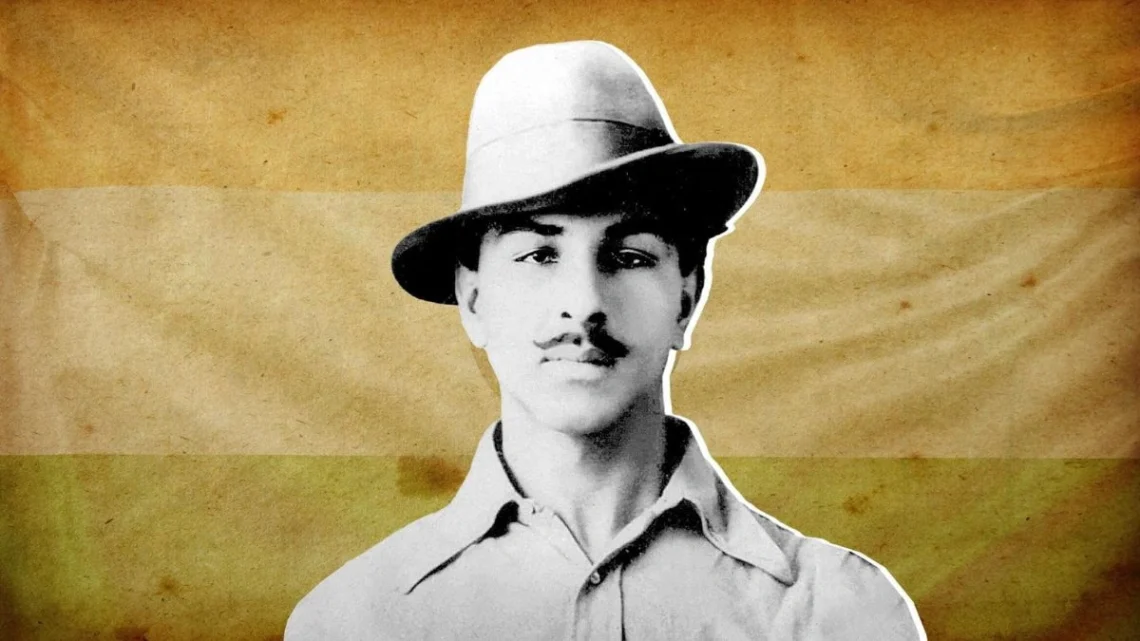
Bhagat Singh was one of India’s most courageous and iconic freedom fighters. Known for his fearless attitude and revolutionary ideas, he played a major role in India’s struggle for independence against British rule.
Even at a very young age, Bhagat Singh became a symbol of patriotism, sacrifice, and resistance.
Quick Info Table
A quick overview of Bhagat Singh’s personal and historical details.
| Field | Details |
|---|---|
| Full Name | Bhagat Singh |
| Date of Birth | September 28, 1907 |
| Birthplace | Banga, Punjab (now in Pakistan) |
| Nationality | Indian |
| Profession | Revolutionary Freedom Fighter |
| Known For | Independence Movement |
| Father | Kishan Singh |
| Death | March 23, 1931 |
| Age at Death | 23 Years |
Family & Background
This section highlights his roots and upbringing.
Bhagat Singh was born into a patriotic Sikh family deeply involved in the freedom struggle. His father and uncle were also freedom fighters.
Family Details
- Father: Kishan Singh
- Mother: Vidyavati
- Uncle: Ajit Singh
His family environment played a crucial role in shaping his revolutionary mindset.
Early Life and Education
A look into his formative years.
Bhagat Singh showed strong patriotic feelings from a young age. He was deeply influenced by events like the Jallianwala Bagh massacre.
He pursued his education in Lahore but later dedicated himself fully to the freedom struggle.
Entry into Freedom Struggle
This is the most important part of his journey.
Bhagat Singh joined revolutionary organizations and began actively fighting against British rule.
Key Activities
- Joined Hindustan Socialist Republican Association (HSRA)
- Promoted revolutionary ideology
- Inspired youth to join the movement
Major Revolutionary Actions
Saunders Assassination
Bhagat Singh and his associates killed British officer Saunders to avenge Lala Lajpat Rai’s death.
Central Assembly Bombing
- Threw bombs in Central Legislative Assembly
- Intended to protest, not to kill
- Arrested voluntarily to spread message
His famous slogan:
👉 “Inquilab Zindabad”
Jail Life and Hunger Strike
Bhagat Singh protested against unfair treatment of Indian prisoners.
Key Highlights
- Went on long hunger strike
- Demanded equal rights for prisoners
- Became national hero during imprisonment
Death and Martyrdom
A defining moment in Indian history.
Bhagat Singh was executed by the British on March 23, 1931.
Key Details
- Hanged at age 23
- Became symbol of sacrifice
- Remembered as Shaheed (martyr)
Career Stats and Overview
| Category | Details |
|---|---|
| Role | Revolutionary |
| Organization | HSRA |
| Major Action | Assembly Bombing |
| Age at Death | 23 |
| Impact | Inspired millions |
Net Worth and Lifestyle
Bhagat Singh lived a simple life.
Lifestyle
- Focused on revolution
- No interest in wealth
- Dedicated to nation
Achievements and Recognition
Key milestones of his life.
Major Achievements
- Inspired youth across India
- Became symbol of bravery
- Played key role in independence movement
- Remembered as national hero
Legacy and Impact
Understanding his long-term influence.
Bhagat Singh’s sacrifice inspired generations of Indians. His revolutionary ideas and courage made him one of the greatest freedom fighters in Indian history.
Interesting Facts About Bhagat Singh
- Read many books on revolution
- Influenced by global revolutionary leaders
- Became martyr at just 23
- Known for fearless personality
- Icon of Indian youth
FAQs About Bhagat Singh
Who was Bhagat Singh?
He was an Indian revolutionary freedom fighter.
Why is Bhagat Singh famous?
He is known for his role in the independence movement.
When did Bhagat Singh die?
He was executed on March 23, 1931.
What is Bhagat Singh’s slogan?
“Inquilab Zindabad”
Conclusion
Bhagat Singh’s life is a powerful example of courage, sacrifice, and patriotism. Despite his young age, he left a lasting impact on India’s independence movement.
His legacy continues to inspire generations, reminding us of the true meaning of freedom and bravery.
For More Information Visit BiographyForYou